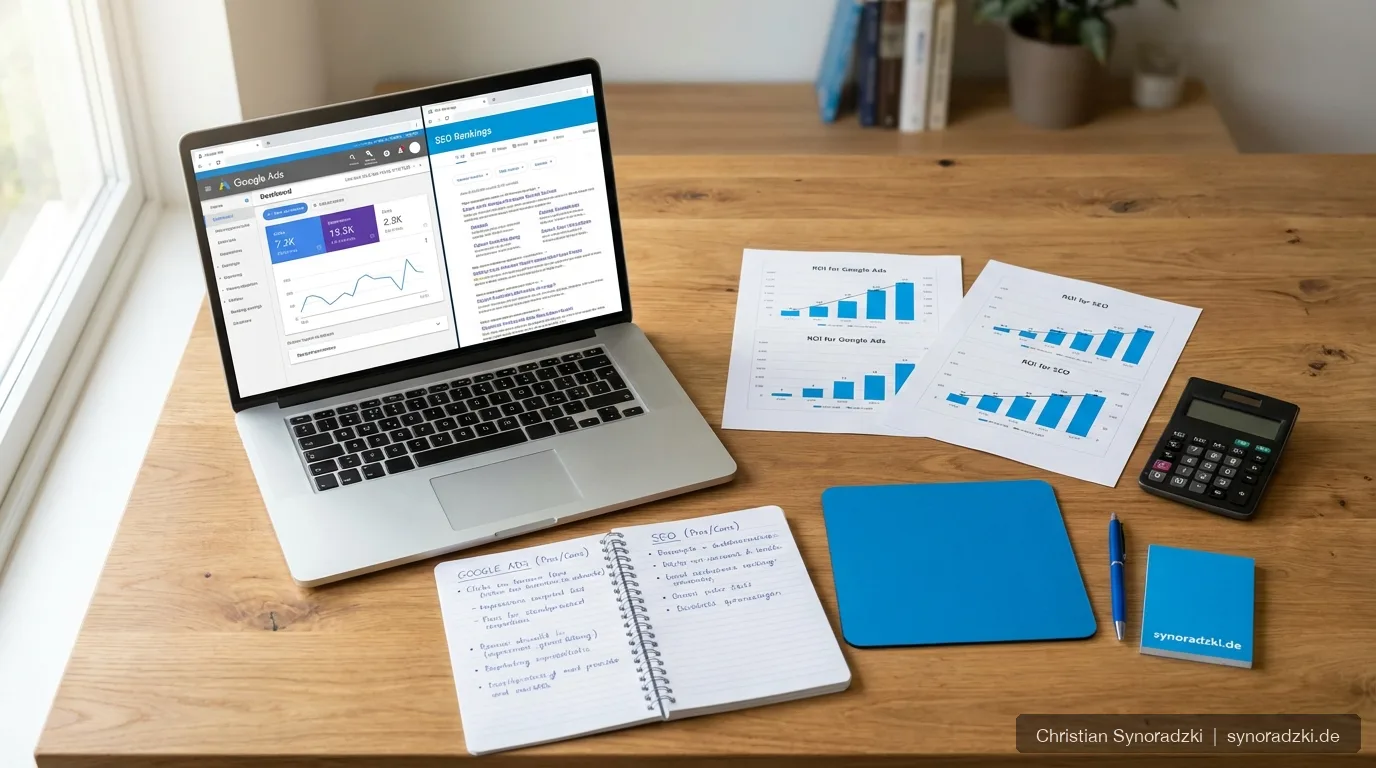
One of the most common questions in online marketing: should I invest in Google Ads or SEO? The honest answer: it depends. Both channels have clear strengths — and the best strategy is often a combination of the two.
Google Ads: Immediate Visibility, but at a Cost
With Google Ads, you can appear on page one within hours. That makes the channel especially valuable when you need results fast:
Advantages:
- Immediate traffic from day one
- Full control over keywords, budget, and target audiences
- Ideal for seasonal campaigns or product launches
- Precise measurement of cost per conversion
Disadvantages:
- Costs accrue with every click — stop paying and the traffic disappears
- Click prices in competitive industries can quickly reach EUR 5–15 or more
- Many users skip ads and preferentially click on organic results
SEO: Sustainable Traffic, but Patience Required
SEO is an investment in long-term visibility. Rankings built up over time deliver consistent traffic for months and years — without ongoing click costs.
Advantages:
- Sustainable, cost-free traffic from organic search
- Higher trust among users (organic results get clicked more often)
- A competitive advantage that strengthens over time
- Positive effect on your overall online presence
Disadvantages:
- Results take time (3–6 months is realistic)
- Requires ongoing work on both technical SEO and content
- Rankings are not guaranteed and can fluctuate
When Does Each Channel Make Sense?
Google Ads is the right choice when you:
- Want to make a new product or service visible quickly
- Are promoting seasonal offers (e.g. holiday season, Black Friday)
- Want to test keywords before investing in SEO content
- Need to generate leads or sales immediately
SEO is the right choice when you:
- Want to become independent from advertising budgets long-term
- Are operating in a market with high click prices
- Want to build trust and authority in your industry
- Want to cover informational search queries that are difficult to make profitable with ads
The Best Strategy: Combining Both Channels
In practice, combining both channels often delivers the greatest impact:
- Start with Google Ads to collect data immediately — which keywords convert, which landing pages work.
- Build SEO in parallel and use the Ads data for your content strategy.
- Gradually reduce Ads spending once your organic rankings take hold.
- Keep Ads for areas where organic rankings are difficult to achieve.
This way you avoid the classic trap: going all-in on one channel and either overpaying or waiting too long for results.
Budget Planning: A Rule of Thumb
If you’re just getting started, a split of 70% Ads and 30% SEO can make sense. As your organic rankings grow, that ratio shifts. After 12–18 months, many businesses invest the majority in SEO and use Ads only in a targeted way.
Conclusion
Google Ads and SEO are not competitors — they complement each other. The key is to use both channels strategically and to optimize continuously.
Want to find out which channel mix works best for your business? An SEO audit shows you where you stand organically and where the biggest opportunities lie. Contact me for personalized advice.
Need support?
As an SEO freelancer with over 20 years of experience, I help you grow your online visibility sustainably.

Über den Autor
Christian SynoradzkiSEO-Freelancer
Mehr als 20 Jahre Erfahrung im digitalen Marketing. Fairer Stundensatz, keine Vertragsbindung, direkter Ansprechpartner.
All articles in the Blog.